Operationalizing Secure by Design: a CISO’s guide to closing the gap between policy and reality
We’ve been listening to dozens of CISOs. In roundtables, peer forums, customer and prospect calls, on the record, off the record, at event floors and …
Detectify
Attack Surface Monitoring has become a critical component of modern cybersecurity programs. As organizations scale their cloud environments, applications, APIs, and third-party services, so does their external attack surface. Every new cloud instance, API endpoint, marketing microsite, and third-party SaaS tool expands your perimeter.
But there are two hard truths for security teams: You cannot protect what you don’t know exists, and you cannot secure what you don’t deeply test.
Historically, AppSec teams have treated Attack Surface Monitoring (ASM) and Dynamic Application Security Testing (DAST) as two separate disciplines. One team found the assets. Another team tested the code.
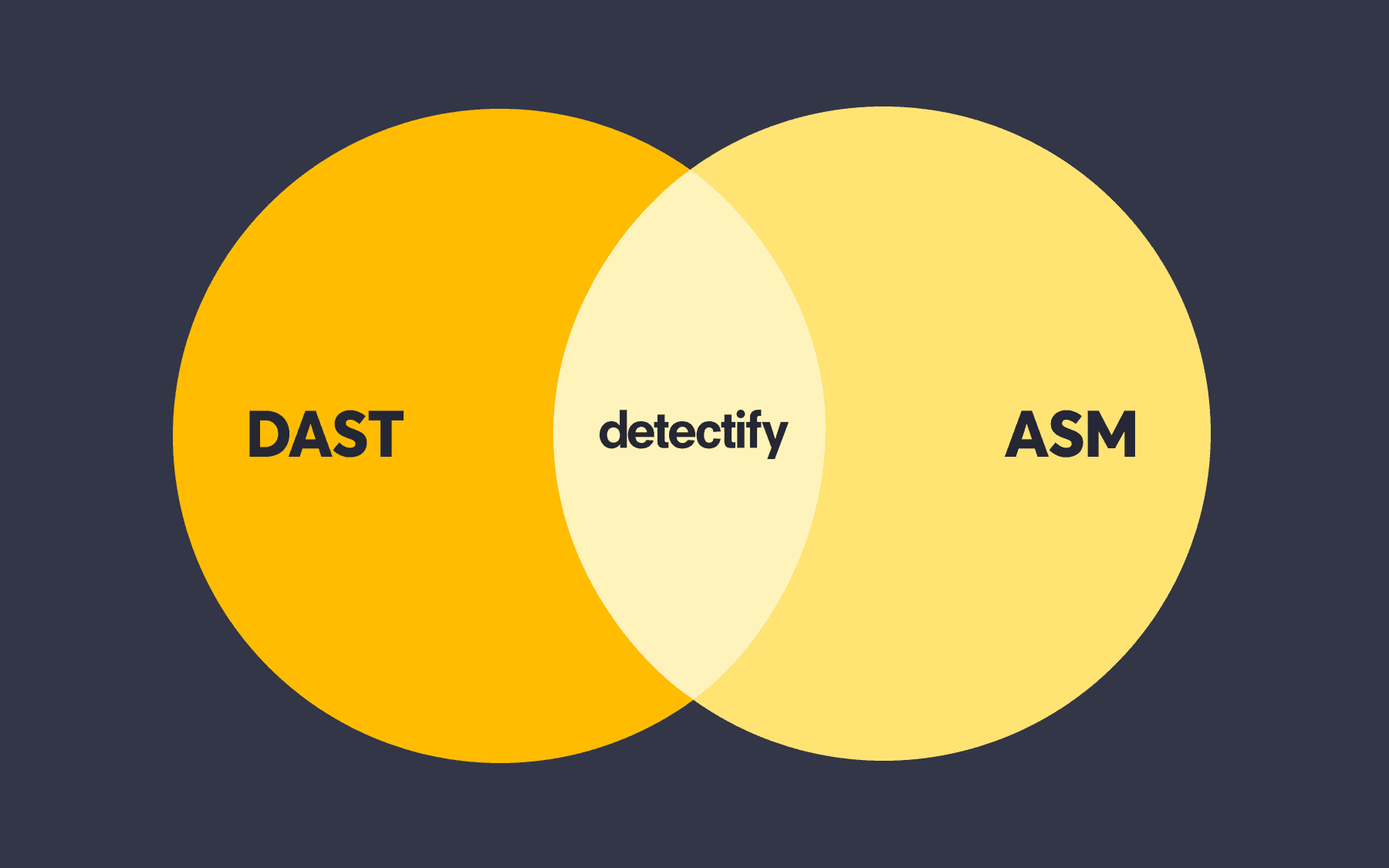
Today, this siloed approach leaves massive blind spots. To stay ahead, leading organizations are combining the broad discovery power of ASM with the deep probing capabilities of DAST.
In this post, we’ll break down why ASM and DAST belong together and how combining discovery with deep testing helps eliminate AppSec blind spots.
Attack Surface Monitoring (ASM) helps organizations discover and monitor the internet-facing assets attackers can see. That includes everything from domains and subdomains to APIs, cloud resources, development environments, and shadow IT.
Unlike traditional asset inventories, external attack surface monitoring takes an outside-in approach. It looks at your organization the same way an attacker would: by identifying what is exposed to the internet and assessing where risk may exist.
Attack Surface Monitoring can uncover:
As organizations move faster and deploy more infrastructure, continuous attack surface monitoring helps ensure those assets don’t go unnoticed.
Every new application, API, cloud resource, and third-party service expands your attack surface. The challenge is that many of those assets never make it into a formal inventory.
Development teams launch new environments. Acquisitions introduce unknown infrastructure. Shadow IT appears outside established security processes. Before long, security teams are responsible for protecting assets they may not even know exist. Without attack surface monitoring, these blind spots can become easy targets for attackers.
Attack Surface Monitoring helps organizations identify exposed assets before they become security incidents.
To understand why a combined approach is necessary, we first have to look at what these tools do independently:
So where does the gap emerge? Traditional DAST scanners are blind without a predefined list of URLs to scan. If your ASM tool finds a rogue staging site, but your DAST tool isn’t configured to test it, that asset remains a gaping security vulnerability. Conversely, knowing an asset exists (ASM) does you little good if you don’t know whether its login portal can be bypassed (DAST).
Attack Surface Monitoring is highly effective for discovering exposed assets, but visibility alone does not guarantee security.
An ASM platform can identify:
However, attack surface monitoring typically cannot determine whether those assets contain exploitable vulnerabilities. Knowing an application exists is valuable. Knowing whether an attacker can exploit it is essential.
For example, attack surface monitoring may reveal:
But it may not reveal:
This is where Dynamic Application Security Testing (DAST) becomes a critical complement to attack surface monitoring.
When you bridge the gap between attack surface monitoring and DAST, your security posture transforms from reactive to proactive. Here is what happens when these two pillars operate in tandem:
Instead of manually entering new hostnames into your DAST tool, the Detectify Surface Monitoring engine automatically identifies new assets as they are discovered. It then conducts a classification analysis to determine the purpose of each asset and assesses whether it warrants a thorough scan (Application Scanning, API Scanning, or Internal Scanning) to identify any deep-layer application vulnerabilities.
Legacy scanners often overwhelm security teams with hundreds of alerts. Combining ASM and DAST gives your alerts immediate context. You don’t just find out that a vulnerability exists; you find out exactly where it sits on your external attack surface, whether it is in a critical production domain, and how easily an attacker could exploit it.
For example:
This context helps organizations prioritize remediation efforts based on real-world risk.
Modern engineering teams deploy code multiple times a day. A static weekly scan cannot keep up. By pairing continuous asset discovery with automated dynamic testing, you ensure that as fast as developers can spin up new infrastructure or deploy new code, it is being mapped and rigorously tested for runtime bugs.
Organizations that combine attack surface monitoring and DAST can:
Rather than treating asset discovery and vulnerability testing as separate activities, organizations can build a more complete attack surface management strategy.
Securing your perimeter shouldn’t require managing a fragmented portfolio of disconnected security tools. You need a platform that seamlessly marries external asset discovery with production-grade application testing.
Detectify is engineered specifically to bridge this gap, unifying elite Attack Surface Monitoring and advanced DAST features into a single, cohesive workflow.
Here is how Detectify’s unified approach secures your organization:
Stop guessing where your vulnerabilities are hiding. Start combining continuous discovery with deep dynamic testing.
Effective attack surface monitoring requires more than discovering assets, it requires understanding which assets are vulnerable and where attackers are most likely to strike.
By combining attack surface monitoring with DAST, organizations can improve visibility, reduce blind spots, and strengthen overall attack surface protection.
Ready to see how continuous attack surface monitoring and dynamic security testing can help secure your organization? Start a trial or book a demo.
What is the difference between Attack Surface Monitoring (ASM) and DAST?
Why should organizations combine Attack Surface Monitoring (ASM) and DAST?
Combining ASM and DAST eliminates security blind spots by ensuring that every newly discovered asset is immediately evaluated and rigorously tested. Traditional DAST scanners require manual URL inputs, meaning they often miss hidden or newly deployed staging environments that an ASM tool would easily catch. Merging them ensures continuous discovery automatically fuels comprehensive vulnerability probing.
What is shadow IT, and how does it impact application security?
Shadow IT refers to any infrastructure, software, cloud instances, or applications deployed by teams without the explicit knowledge or approval of the central IT and security departments. It heavily expands an organization’s attack surface, leaving unmapped, unmonitored endpoints that often contain critical vulnerabilities because they bypass traditional vulnerability management cycles.
Can Attack Surface Monitoring identify vulnerabilities?
Static scanners rely on lagging databases or delayed CVE publications, which can leave systems exposed to zero-day threats for weeks. Real-time threat intelligence unifies crowdsourced insights from security researchers with autonomous AI analysis to build newly discovered exploit vectors into automated scanners within minutes, allowing organizations to defend against live, active threats before standard patches are widely available
We’ve been listening to dozens of CISOs. In roundtables, peer forums, customer and prospect calls, on the record, off the record, at event floors and …

For years, development and security practitioners have treated dynamic application security testing as a critical final safety check before code goes live. However, the external …